|
Model 70 Restoration project
1 Attachment(s)
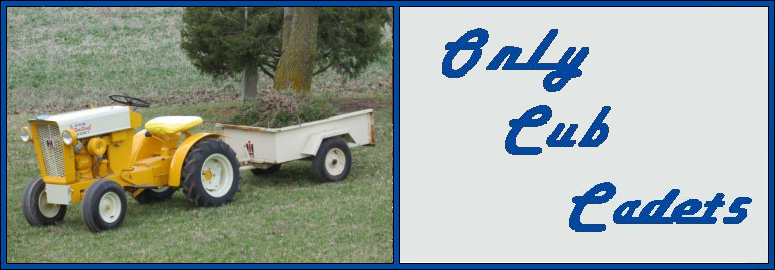
I bought this tractor for it's new owner (my son) about 8 years ago. He could touch the pedals and happier than a pig in slop at the time. The tractor had some problems which needed to be repaired but as you can see, my son seemed to be happy with his new toy. Yes, from a safety perspective he already knew how to drive a tractor. Now he was getting one. In the below pic he is 6 and currently he is 13 and mows multiple yards with different tractors within our community.
As for the 70, I got it completely operational and mowed my yard with it for a few years before taking it apart for it's rebuild / facelift. |
2 Attachment(s)
Ok, the first thing was to take this tractor apart. I don't have any pic's of this but I can say it was somewhat of a challenge due to rust and over sometimes 50 years of it....
The next step was to clean off any grease and prime. Since this Old-Girl was getting a 50 year make-over I decided to use a good epoxy primer and used PPG as the topcoat. If this was a show tractor, I would have used a two part base clear, but this machine is meant to be used for work. Here are the parts being done. First was to treat the frame with rust stopper. This liquid was brushed on and allowed to dry. Then I hung the frame up in the garage for priming. |
1 Attachment(s)
Next step was to prime all the main components. All the small parts like the spindles also got primed, but I didn't include a pic of that process. Next came the real fun part------sanding.........
|
2 Attachment(s)
The primer I used has allot of pigment for filling minor voids. OK, this is a tractor and not a car.....I used a block sanding block just because it was easier on frame. Prepping the hood, which is the show piece I paid attention to detail and maybe was a little to anal, but I'll let you guy's decide. I used dual spot lights shining down the hood looking for any flaws or dents in the lines of the frame. What ever I found where filled with glazing putty.
|
3 Attachment(s)
A friend of mine does metal and fiberglass fabrication. He allowed me to use his paint booth for painting the big stuff. Other parts where painted behind a shed at my house.
|
3 Attachment(s)
Here is what the painted parts look like. I used the original color codes of 901 white and federal yellow. I was able to cross these over to PPG codes without a problem. I was quite happy with how the tire rims cam out.
A form member named Merk helped me with the 901 white which I used. Once this color was sprayed, it looked somewhat olive-white. I had expected this to be white and without any tint. Thanks Merk for the help and clarification. |
1 Attachment(s)
The the remaining other parts got primed and painted. I took a suggestion and waited a few months after painting these parts to let them harden and cure completely before I started re-assembly.
|
Kool:beerchug:
Always enjoy seeing pictures of others "restorations".:beer2: Looks good, it'll be ready for another 50 years.:ThumbsUp: |
Looks great!
My oldest is 4 and youngest 1. I hope to have a nice looking set of Cubs for them to take to their homes and use some day. I'll be sure to give them plenty of seat time growing up, you know to create nostalgia and all :D |
Looking GREAT so far! Keep posting those pics!
|
Bring memorys back looking at your son picture! I was about 10 years old smilling like him sitting on my dad "O", the first tractor I ever been on!
You did a good job, can't wait to see the final result assembled! :beerchug: |
Your 70 is looking good.
|
Looking good, keep it up.:beerchug:
|
Thanks guys. I'll have some more pic's tonight.
|
Really nicely done, and I enjoyed your history with the machine. Good luck.
|
Very nice work there and quality materials used, great job
|
Your 70 looks awesome!
|
2 Attachment(s)
Ok here are more pics. First I supported to trans-axle on a cinder-block support with wood underneath. Next the frame was mounted and bolted to the trans-axle. Supported the front axle and frame with a whiskey barrel. It was the only thing I could find in a pinch.
|
2 Attachment(s)
The axle pin was replaced with a new one. I also did a system improvement by putting a zerk fitting in the axle. In taking the tractor apart it was discovered that the original pin was frozen in the bore. The tractor appeared to pivot correctly but it did so due to the roll pin being broken. It took an acetylene torch getting the entire axle assembly glowing red to get the original axle pin out. I replaced it with one designed for the 70/100's off from ebay. Hopefully now the tractor will now pivot the way it was designed to and won't seize up from rust again.
|
1 Attachment(s)
Also, prior to taking this restoration the steering was sloppy. Research from this forum and other information found stated that the sloppieness is due to wear in the drag-link and in the steering assembly. Currently I have 4 new tie-rod ends along with a bearing carriage, steering stud pivot pin and a bearing on order.
The Drag-link did have slop in it. To fix this, I used a kit available from another member of this forum which basically is a tapered pin. You use a reamer which comes with the kit which creates a tapper in the spindle hole where the original roll pin connected the drag-link to the steering spindle. What you wind up with is a tapper hole for the pin which goes from one side of the drag-link to the other and then a nut is used to secure and to apply restraining pressure to lock everything in place. |
1 Attachment(s)
In re-conditioning the axle, I pulled the pressed in zerk fitting and replaced with a new one. This was drilled with a 1/4 in bit and tapped. The new zerk was screwed in and seated.
|
1 Attachment(s)
I installed the steering column and the clutch. The clutch is not going to be taken apart for it had been done previously a few years back and worked perfectly. Didn't see a reason for doing it again. The mounting bolts I've replaced with stainless ones. I did this for a reason but the biggest is for a grounding spot. The original ground was on the instrument / steering column bottom bolt. Since I don't plan to use original ground spot, I need a bolt isn't going to rust up on me creating electrical problems.
|
Great job Gregory. Can you provide us with the member who has the tapered spindle pin deal? (Jeff? Mark?) btw Jeff makes the steer axle pivot pin and bushings for our cubs too. Very cool redesign to tighten it up as a combination of three or different areas gives a very loose steering.
|
Very nice work, keep it up!:beerchug:
|
Yes Alvy, the gentlemen's name is Pete at http://www.spaco.org/loose.htm
It's been a few years since I ordered this, but I was impressed with how it worked. Once I finish with the steering assembly we'll see how tight everything becomes. Upon drilling out the roll pin hole in the spindle which was shaped like an olive, as listed in Pete's documentation. |
Need the collective wisdom from the group on trans-fluid. I drained the fluid and cleaned out the rear end of any trash and sludge. When filling with oil, do I used hi-tran or 80/90 gear oil ?.
I've painted the remaining engine parts and the engine will go in this weekend along with other frame parts. Trying to get it going and asking for advice. Greg |
I've always ran 80-90 in my geardrives.
|
Quote:
|
I don't remember ever seeing 80/90 gear oil in any Cub Cadet literature.
SAE 30 or Hy-tran. |
Hy-Tran is the way to go.
|
Thanks, Hy-tran it is. I'll pick this up over the weekend.
More Pics to come. I've got the remaining federal yellow parts painted this week. Still have to do the foot pads and the steering tube with black. Hopefully I'll get the engine in tomorrow, even with the heat index which is suppose to be a killer..... Question about the deck. I had planned to take this apart along with removing the bearings, wheels and rollers, have it sand blasted and start from bare metal. Since the deck will get the most amount of abuse, I planned to prime and top coat with a paint which I have experience with is a marine based paint. The color of choice is Oyster White, but is this staying with the correct color. I know it's not 901 white, but the pics I've seen have all white decks. I"m seeking idea's ? |
Quote:
Looks good.. keep us posted:beerchug::beerchug: The 70/100's are one of my favorites:biggrin2::biggrin2: They have classic lines and kind of sit like a bulldog... (wide flat front... kind of up in the front and down in the back) |
Looking good, keep us up to date on pictures. WE LIKE PICTURES.:beerchug:
X-3 on hy-tran fluid.:beer2: |
Looking great! Please keep the pics coming.
|
Looking good!
|
Reached a small snag in this rebuild. It appears the IH / CC used press zerk fittings on their tractors. The two front axle ones have been replaced, drilled out and tapped for a stainless 4-28 zerk. For the steering column I planned to replace the zerk in the same fashion, but it appears someone tried to do this before and it never worked. Currently the hole for the zerk is to big for a 4-28 fitting. I have an order in for helicoils which have not arrived yet. I'm not new to doing a helicoil job, but has anybody on the forum done this on a steering head ? There doesn't seem to be allot of aluminum in this area to drill and tap where this zerk is to go.
|
2 Attachment(s)
The original zerk fitting had long since fallen out before I bought the tractor, so I tried to install a 4-28 as was used on the front axles. Didn't work ! Someone had already been into and tried to fix this. I ordered heli-coils and the wrong size arrived. I solved this with harbor freight set of zerk fittings. Had to tap the hole and clean all the shavings afterwards but the new zerk went into place.
|
4 Attachment(s)
Next was to start rebuilding the steering head. I had decided to install all new parts. Yes, there is a part for a green tractor in one of these pics. JD used the same Ross steering head. In trying to source these parts, suppliers including the listed sponsors didn't have any. I found an old stock JD part which I knew would fit.
As for the bearings, I pre-coated the races with grease so the ball bearings would fall out of the holder . (Don't ask me how I know this !!!!). The steering column turns smoothly. You can see the new bearings in place |
1 Attachment(s)
Yes, the green plate fit the housing.....
|
1 Attachment(s)
Seek collective wisdom. The end cap on other Ross steering heads which I've rebuilt have used a cotter pin which slides in hole drilled in steering head locking the end-cap nut in place which also secures movement of the bottom bearing.
This tractor doesn't have this cotter pin or the hole drilled in the housing. What is a good way to secure this cap in place ? |
| All times are GMT -4. The time now is 07:24 PM. |
Powered by vBulletin® Version 3.8.11
Copyright ©2000 - 2026, vBulletin Solutions Inc.